
When Training Stops Creating Impact: A Training Needs Analysis Case from an International School
MindWork Solution
5/12/20263 min read


In many educational institutions, training is no longer questioned. It is scheduled, delivered, attended, and certified. On paper, everything looks correct. Yet in reality, the impact is often minimal. This was exactly the situation we encountered when MindWork Solution was invited to work with an international school in the educational sector that was struggling with ineffective and unengaging training sessions.
The school leadership shared a clear concern: training sessions were long, repetitive, and increasingly boring. Attendance was mandatory, but engagement was low. Participants showed up, completed the sessions, received certificates, and returned to their routines with little or no change in behavior or performance. The school did not need more training, it needed clarity.
Starting with Training Needs Analysis, Not Assumptions
Instead of proposing immediate solutions, our team began with a Training Needs Analysis (TNA). At MindWork Solution, we believe that training should never start with content. It should start with understanding people, motivations, and the real environment in which learning takes place.
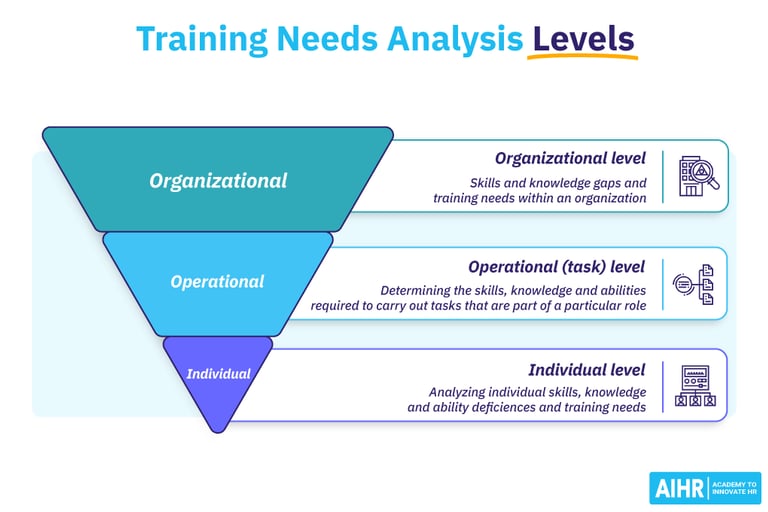
We conducted a series of face-to-face interviews across multiple levels of the organization. These interviews included the School Director, teachers, administrative staff, and support employees. Each group provided a different perspective, yet together they revealed a critical insight.
Many employees were attending training sessions primarily to obtain certificates. These certificates were directly linked to salary increases and career progression. As a result, the purpose of training shifted from learning and development to compliance. Knowledge, engagement, and application became secondary. When learning loses its meaning, no delivery method can save it.
Observing the Reality Inside Training Rooms and Classrooms
Interviews alone rarely tell the full story. To validate our findings, we moved into direct observation. Our team attended internal training sessions to observe how content was delivered, how participants interacted, and how trainers facilitated discussions. What we saw confirmed the feedback we had already received.
Training sessions followed a one-way delivery model. The trainer spoke, the audience listened, and interaction was minimal. There was little storytelling, no structured engagement techniques, and almost no space for reflection or participation. Time passed slowly, and attention faded quickly.
We then extended our observation to classroom sessions with students. The same pattern appeared. Teaching methodologies were outdated and heavily instructor-centered. Students were passive, disengaged, and easily distracted. Teachers struggled to maintain attention and control, not because of a lack of effort, but because the learning environment itself did not invite participation.
Learning had become something that happened to students and teachers, not with them.
Identifying the Core Gap
At this stage, one conclusion became clear. The challenge was not a lack of knowledge, expertise, or commitment. The real gap was capability.
Teachers and staff had never been formally trained on how to design and deliver effective training or learning sessions. They were subject-matter experts, but not learning designers or facilitators. Concepts such as engagement, storytelling, learning psychology, adult learning principles, and interactive facilitation were missing from their professional toolkit.
Without these skills, even the most valuable content becomes ineffective.
Designing a Sustainable Solution: Train the Teachers
Based on the TNA findings, MindWork Solution designed a targeted and sustainable intervention. Rather than offering scattered workshops, we proposed a structured learning journey aimed at building internal capability.
The solution consisted of a four-session workshop, each session lasting four hours, for a total of sixteen hours. The program was titled “How to Give a Training Session: Train the Teachers.”
The objective was not to create better presenters, but to develop an internal pool of educators and staff members capable of designing professional, engaging, and effective training sessions. The focus was on shifting mindsets from traditional teaching to learner-centered facilitation, equipping participants with practical tools to design sessions that people want to attend, not just complete.
Why This Approach Matters?
When training is treated as a formality, organizations lose more than time. They lose trust in learning itself. Employees attend physically but disengage mentally. Over time, training becomes a burden instead of a growth opportunity.
This case demonstrated the real value of Training Needs Analysis. TNA is not about identifying topics; it is about uncovering behaviors, motivations, and system-level gaps. It helps organizations stop guessing and start designing learning interventions that create measurable change.
At MindWork Solution, we believe that meaningful learning begins when organizations stop asking, “What workshop should we deliver?” and start asking, “Why are we delivering it, and what should change afterward?”
When training is designed with purpose, people do more than attend. They engage, apply, and transform the learning environment from within.
Via AIHR


Via Gemini


Via Collins College