What's Inside a Great Training Room?
Dr Omar Osman
A training room is much more than four walls, chairs, and a projector. It’s the stage where transformation happens. Whether the goal is upskilling a team, onboarding new talent, or hosting a leadership workshop, the environment you create shapes everything energy, focus, participation, and ultimately, the impact of the learning experience.
In today’s world, where corporate training is shifting rapidly toward digital, hybrid, and skills-based learning, organizations can no longer rely on traditional classrooms. Employees expect more: comfort, flexibility, technology, and an atmosphere that feels professional yet energizing. A modern training room must be intentionally designed both physically and psychologically to keep people engaged.
This article explores what truly makes a training room effective: its structure, the setup, the environment, and the little details that transform a simple space into an inspiring learning ecosystem.
The Training Room Begins With Purpose
Every successful learning space starts with a clear question: What do we want people to feel and achieve when they walk into this room?
Some companies focus on knowledge transfer, others prioritize collaboration, while many, especially in the post-COVID era, are racing to keep employees engaged in hybrid settings. The State of Corporate Training Report shows one strong trend: people learn best in environments that feel open, adaptable, and supported by the right digital tools. This means the room must align with the training’s goals rather than forcing the training to fit the room.
When the purpose is clear, the setup naturally follows.
Designing the Physical Training Room: Comfort, Clarity, and Flow
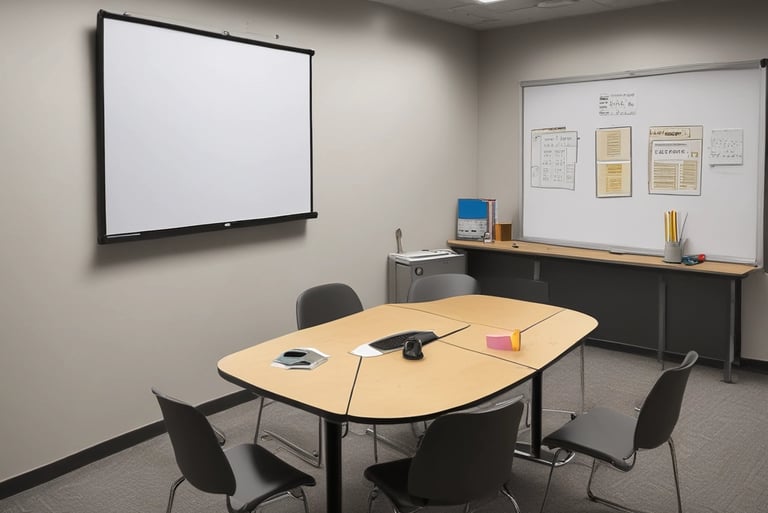
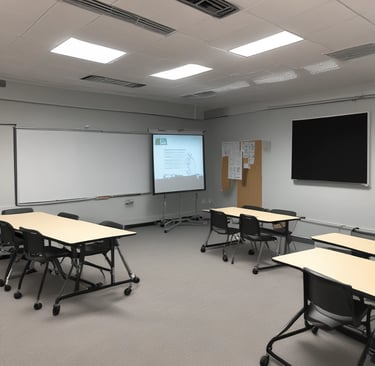
Think of a physical training room as a living environment, it should breathe with the session. The lighting should make people feel awake without overwhelming them. The chairs should support long hours of learning. The room should never feel too tight, too dark, or too cluttered. In fact, studies consistently show that environmental comfort directly influences retention and participation.
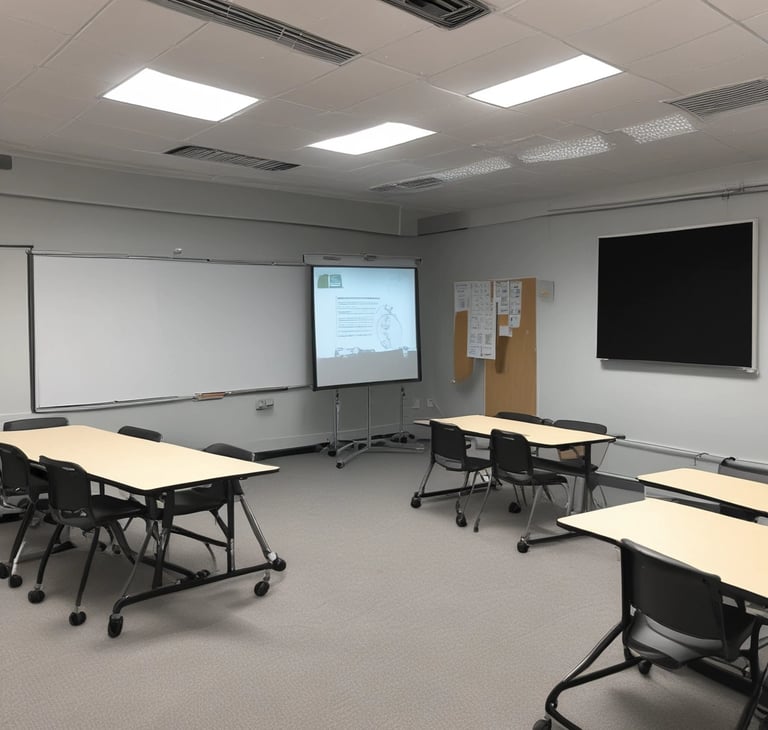
Lighting often plays the first and most subtle role. Too bright, and people feel under pressure. Too dim, and attention drops instantly. Adjustable LED lighting allows smooth transitions from discussions to videos to group work without interrupting the learning flow.
Furniture contributes to both comfort and learning psychology. Ergonomic chairs keep the body relaxed; mobile tables allow quick shifts from a U-shape to clusters, from presentations to teamwork. A flexible room invites movement, and movement helps the mind stay active.
Floor space is another underrated element. A room with freedom to move creates freedom to think. Trainers need space to walk. Participants need space to break into groups. And everyone needs a sense of physical breathing room, crowded spaces increase anxiety and limit interaction.
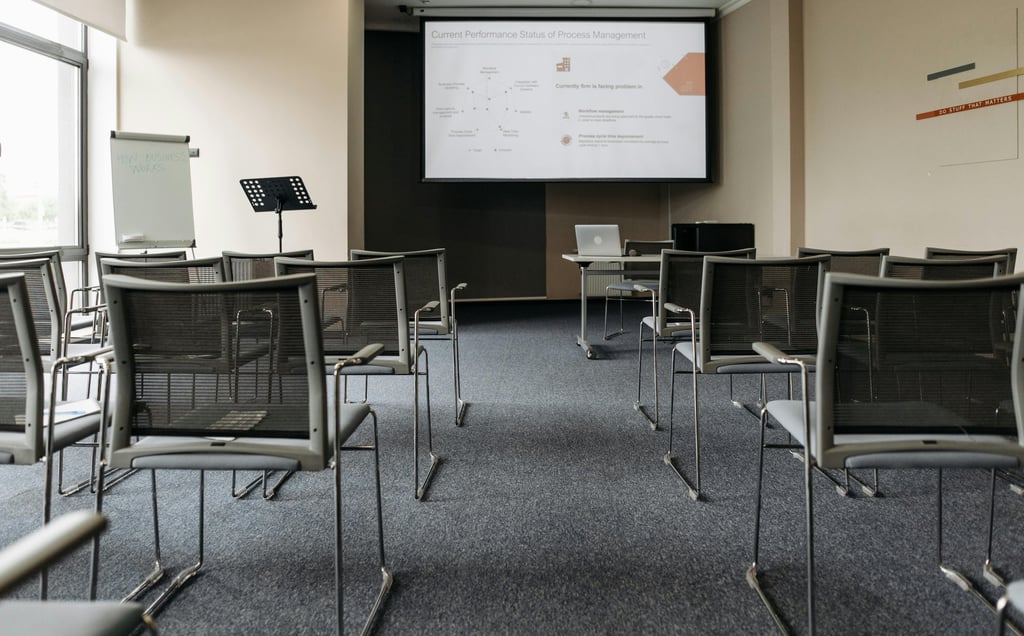
Then comes technology. In a world where every participant holds at least one digital device, the room must support stable Wi-Fi, clear audio, and a screen visible from every seat. A large interactive display can turn passive content into hands-on learning. Sound should feel natural, not disruptive. The best physical training rooms feel modern without being complicated, technology should disappear into the background and simply work.
Choosing the Right Layout: The Shape of Learning
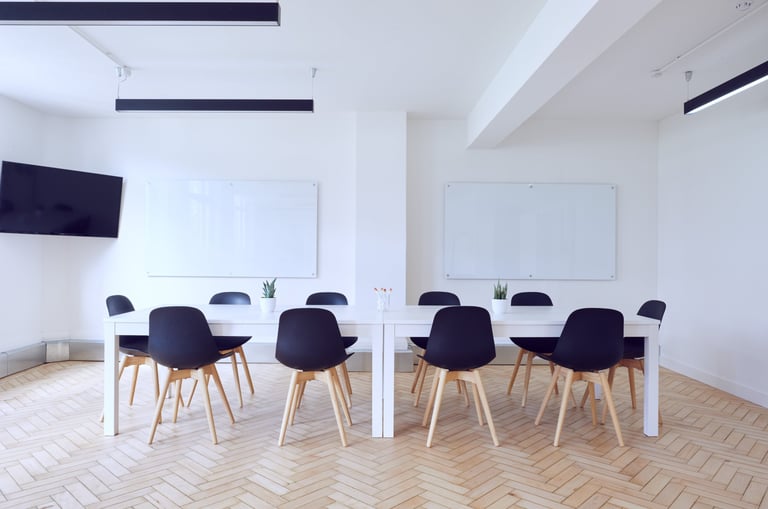
Room layout has a quiet but powerful influence on participation. A classroom style is efficient for large groups, but limits eye contact. A U-shape brings the trainer closer to every participant, encouraging conversation and leadership dialogue. A circle creates equality, eliminating hierarchy perfect for sensitive discussions or team-building. Clusters support collaborative problem-solving, while a V-shape offers an ideal balance between visibility, engagement, and presence on camera.
Every layout tells learners something about how they are expected to behave. A thoughtful layout sets the tone even before the session begins.
The Virtual Training Room: When the “Room” Becomes Digital
When training shifted online, many organizations discovered that “virtual space” is just as real as physical space only invisible. Attention spans became shorter. Engagement needed stronger stimulation. And trainers had to compete with home distractions, background noise, and the temptation of multitasking.
A well-designed virtual training room addresses these challenges through structure and visibility. Trainers need a clean visual background, strong lighting, and a camera positioned at eye level to maintain connection. A separate screen for participants helps the trainer read emotions and reactions in real time. Tools like Zoom, SOFA, and interactive whiteboards replace physical activity with digital collaboration.
In virtual environments, the room is built through interaction. Conversations, activities, polls, breakout rooms each becomes a “virtual wall” that holds the session together. When done well, learners feel surprisingly connected, even across continents.
Hybrid Training Rooms: The Future of Learning
Hybrid training rooms represent the new era of corporate learning, one where remote participants and in-person attendees share the same experience without feeling separated.
To achieve this balance, the room must be highly intentional. A 180° camera ensures that remote learners can see the entire room and feel involved in the group’s dynamics. A mobile totem with integrated speakers and screens acts as a digital “participant,” giving remote learners a physical presence. The trainer stands at the intersection of both worlds, interacting naturally with people in the room and those on the screen.
Furniture needs to move easily to adapt between online-focused sessions and group activities. Audio must be evenly distributed so no voice is lost. The goal is simple: eliminate the feeling of distance. A well-prepared hybrid training room makes every learner, remote or present, feel equally seen.
The Psychology of an Engaging Training Environment
A great training room does something more than host people, it affects their state of mind. Music before the session creates a warm entrance. Soft colors reduce anxiety. Clean visuals help the brain relax and focus. Even small touches like a writing board, markers, or accessible snacks make participants feel cared for.
Engagement is not a single action; it’s an atmosphere.
People engage when:
The room feels open
The trainer feels accessible
The technology feels smooth
The space feels comfortable
The environment feels safe
When the room supports participation, learning becomes natural. People speak more, share more, and internalize more.
Why the Training Room Matters Now More Than Ever?
Workforces are changing. Skills are becoming more specialized. Employees expect digital-friendly experiences. And organizations are recognizing that modern training is not just about content it’s about culture, interaction, and environment.
The training room is where this culture is built.
It is the physical or virtual expression of how much a company values learning.
A well-designed room sends a message:
You matter. Your growth matters. What you learn here is important.
And when people feel that, they learn better.
Final Thoughts
A training room is not simply a space to sit and listen. It is a carefully crafted environment that blends lighting, movement, technology, layout, psychology, and purpose. Whether physical, virtual, or hybrid, the room must create an experience that supports participation, inspires curiosity, and keeps learners engaged.
At the end of the day, great training does not start when the trainer begins talking, it starts the moment someone walks into the room.